AI SEO tools have matured quickly. What started as a novelty layer atop existing keyword tools has become a full-fledged category, helping improve everything from research to AI search visibility.
![→ Download Now: SEO Starter Pack [Free Kit]](https://no-cache.hubspot.com/cta/default/53/1d7211ac-7b1b-4405-b940-54b8acedb26e.png)
Growth teams now have real choices about where AI can provide the most value across the SEO workflow. More than 90% of marketing teams now use AI in their workflows — but having AI in your stack and having the right AI in your stack are two different things.
This guide breaks down AI SEO tools by job-to-be-done, explains how to evaluate them against your growth stack, and provides a practical framework for automating SEO without sacrificing quality.
Table of Contents
- What are AI SEO tools, and where do they add value?
- How to Choose AI SEO Tools for Your Growth Stack
- AI SEO Tools Comparison by Job to Be Done
- How to Automate SEO Without Breaking Your Content
- Frequently Asked Questions About AI SEO Tools
What are AI SEO tools, and where do they add value?
AI SEO tools help with keyword research, clustering, content creation, optimization, audits, internal linking, and AI visibility. They are software platforms that use machine learning and large language models to automate, accelerate, or enhance specific tasks within the SEO workflow.
They accelerate SEO judgment by reducing the time required to apply it at scale. The core jobs AI SEO tools are built to do include the following.
- Keyword research and clustering: Surfacing relevant terms and grouping them by topic or intent, rather than one keyword at a time
- Content briefs and AI-assisted drafting: Generating structured outlines or full drafts based on top-ranking content, search intent, and competitive analysis
- On-page optimization: Scoring and recommending changes to existing content to improve relevance, readability, and structure
- Technical SEO audits: Crawling sites to identify issues like broken links, slow load times, crawl errors, or duplicate content
- Internal linking: Identifying and recommending relevant link opportunities across large content libraries
- AI search visibility: Tracking how and where a brand appears in AI-generated answers from engines like ChatGPT, Perplexity, or Google AI Overviews (a newer but fast-growing use case)
- PR and digital outreach: Identifying link-building and citation opportunities at scale
- Reporting: Synthesizing performance data across channels and surfacing what’s actually driving organic growth
The value AI adds to each of these jobs varies. Research and clustering, technical auditing, and on-page optimization tend to see the highest ROI from automation simply because they’re repetitive, high-volume, and rule-governed tasks. Content drafting and strategy work require more human judgment to be effective.
How to Choose AI SEO Tools for Your Growth Stack
Choosing the right AI SEO tool boils down to matching capability to context. Here’s how to evaluate your options.
1. Start with your objectives.
A team focused on topical authority needs different tools than one focused on improving crawl efficiency or scaling blog output. Before comparing tools, be specific about what job you need done most urgently.
2. Assess your team’s technical skills.
Some AI SEO tools are built for specialists. Screaming Frog, for instance, delivers extraordinary technical depth, but requires comfort with crawl data interpretation. Other tools, like HubSpot’s built-in SEO tools, are designed for marketers who need actionable recommendations without a technical SEO background.
3. Consider content volume.
If a team publishes five pieces per month, a heavy automation stack creates overhead without enough output to justify it. If a team publishes 50+ pieces per month, automation for briefing, clustering, and on-page optimization compounds quickly.
4. Evaluate CMS and CRM integration.
Disconnected tools mean disconnected data. An AI SEO tool that plugs directly into your CMS allows recommendations to be acted on in context, not in a separate dashboard. A tool that connects to your CRM means SEO performance can be tied to pipeline, not just traffic.
HubSpot’s SEO tools are built into Marketing Hub, which means topic and keyword suggestions, page optimization recommendations, and performance analytics all live in the same system as your content, contacts, and conversion data. This integration removes friction and helps growth teams connect SEO efforts to revenue.
5. Think about governance.
AI-assisted drafts and automated recommendations require human review especially for brands where tone, accuracy, or compliance matter. Choose tools that build review into the workflow, not ones that assume automation equals publishing.
6. Check reporting and attribution.
Vanity metrics are easy to track. What’s harder — and more valuable — is understanding whether SEO effort is actually driving qualified traffic, pipeline, or revenue. Prioritize tools with reporting that connects organic performance to business outcomes.
Pro tip: Before evaluating tools, make sure the foundation is solid. The HubSpot Complete SEO Starter Pack includes an on-page SEO template, a search intent and research template, and a 21 SEO myths ebook to help build a reliable SEO baseline — free to download.
AI SEO Tools Comparison by Job to Be Done
There’s no single AI SEO tool that handles every job well. The best approach is to match tools to specific workflow stages. Below is a breakdown by job type, with notes on where each tool excels.
Research and Clustering
Keyword research used to mean building a spreadsheet of terms one by one. AI-powered research tools now surface related terms, group them by topic cluster, and prioritize opportunities based on difficulty and intent in minutes.
HubSpot SEO Tools
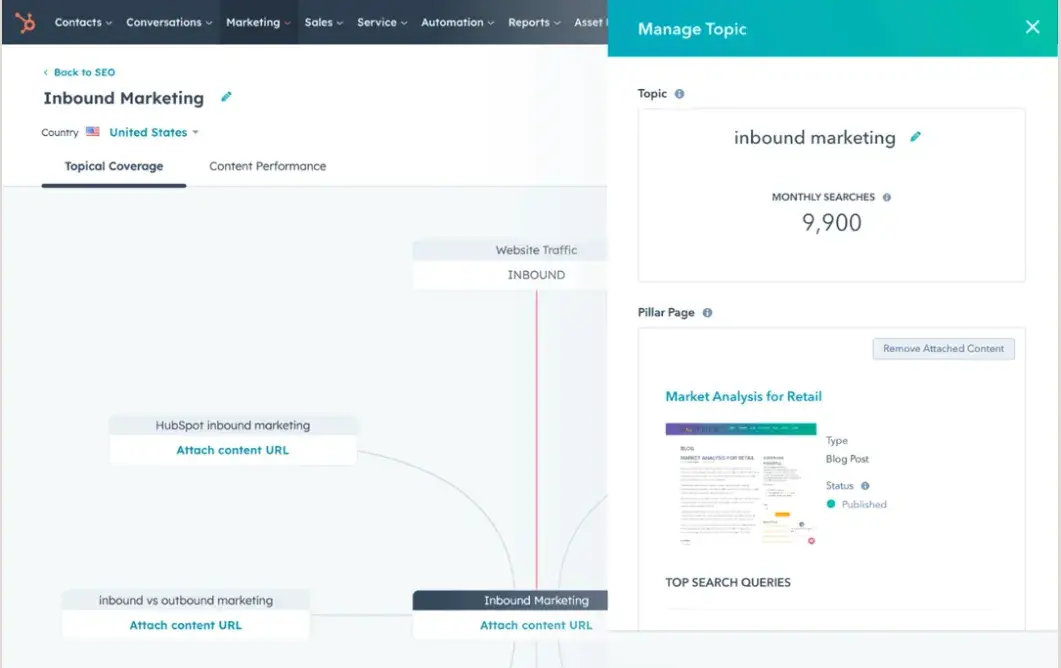
HubSpot’s SEO tools are built directly into Marketing Software, which makes them useful for teams that want research to flow directly into content creation and publishing. The topic cluster tool helps teams identify pillar topics, map supporting content, and visualize how pages relate, so internal linking and content planning happen in the same system.
Key Features
- Topic cluster and pillar page tool that maps supporting content to core topics and surfaces gaps in your content architecture.
- On-page SEO recommendations ranked by priority, so teams know which fixes will move the needle most without having to interpret a raw audit.
- Keyword tracking and topic suggestions are built into the same dashboard where content gets published and managed.
- Google Search Console integration that pulls real search performance data directly into HubSpot, connecting impressions, clicks, and rankings to the pages you’re already managing.
- AI-powered on-page suggestions through Breeze, including meta title and description generation for blog posts and landing pages.
- SEO Optimize panel inside the page editor so readability scores, meta fields, and SEO recommendations are visible while you’re writing.
- Full-funnel analytics and revenue attribution that tie organic traffic back to leads and pipeline inside the CRM.
What I like: The native CMS connection means keyword insights don’t stay in a separate dashboard. A recommendation made in the SEO tool can be acted on immediately in the page editor.That integration removes real friction while the CRM connection means you can actually measure whether that organic traffic converts.
Best for: Growth teams already using HubSpot CMS or HubSpot Smart CRM who want research, content strategy, and performance measurement in one place.
SparkToro
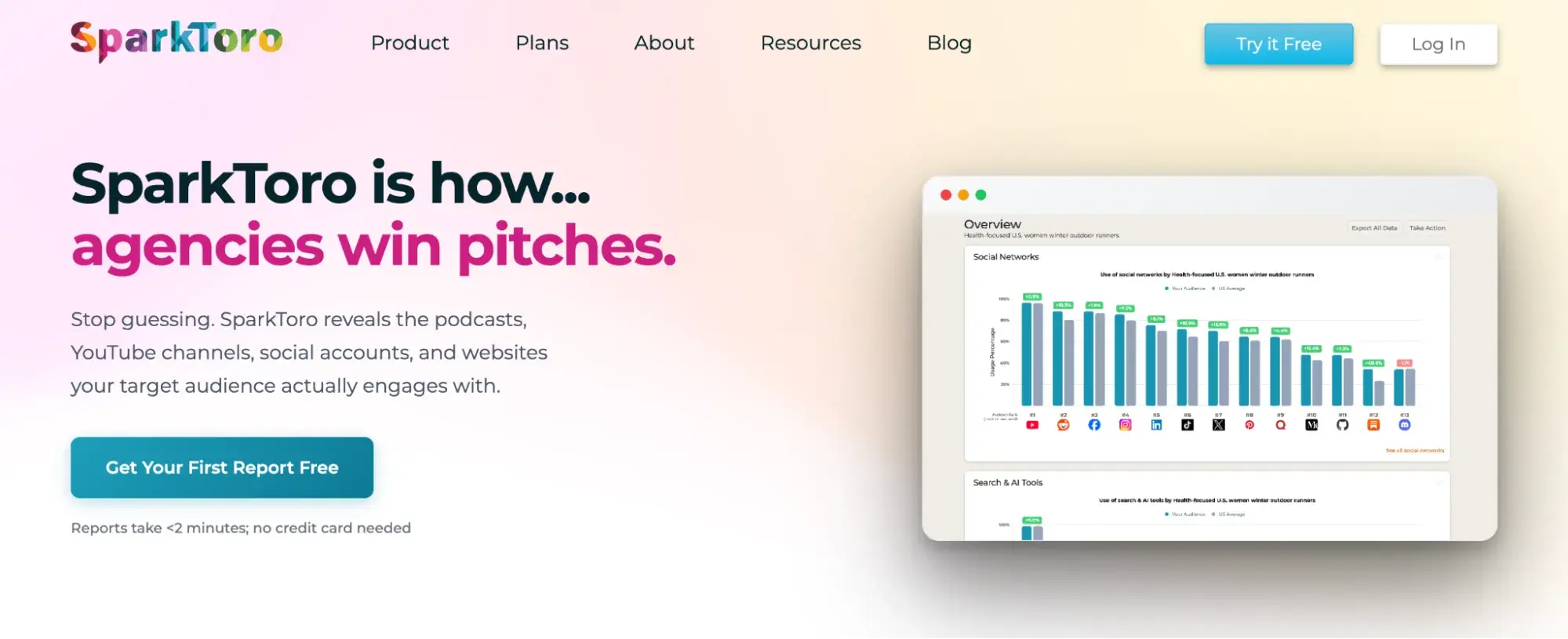
SparkToro is used for audience research and content planning inputs, and it’s an audience intelligence tool that answers a question most SEO tools don’t touch: where does your target audience actually spend their time online?
Rather than starting with keywords and working backward to an audience, SparkToro starts with the audience and surfaces the podcasts they listen to, the websites they read, the YouTube channels they watch, the social accounts they follow, and the topics they search for.
Key Features
- Audience behavior and demographics data, including websites, podcasts, YouTube channels, and social networks your target audience frequents
- “Describe Your Audience” is a natural language feature that lets marketers describe their target customer in plain English and get instant audience intelligence, no manual filter configuration required
- Keyword and trending question data showing what your audience searches for on Google, useful for grounding content planning in real audience behavior
- Competitive audience comparison to analyze your audience versus a competitor’s
- Two years of trend data showing how audience behavior and media consumption habits change over time
- Demographic data, including age, gender, job titles, skills, and interests, for building data-backed personas
- Publication and influencer discovery for prioritizing PR outreach and guest posting targets
What I like: SparkToro answers a question that keyword research can’t — not what people are searching for, but where they’re paying attention.
Best for: Content strategists, digital PR teams, and demand gen marketers who want to ground their channel and distribution decisions in audience data rather than convention or guesswork.
Pricing: Free plan available. Paid plans from $38/month
Keyword Insights
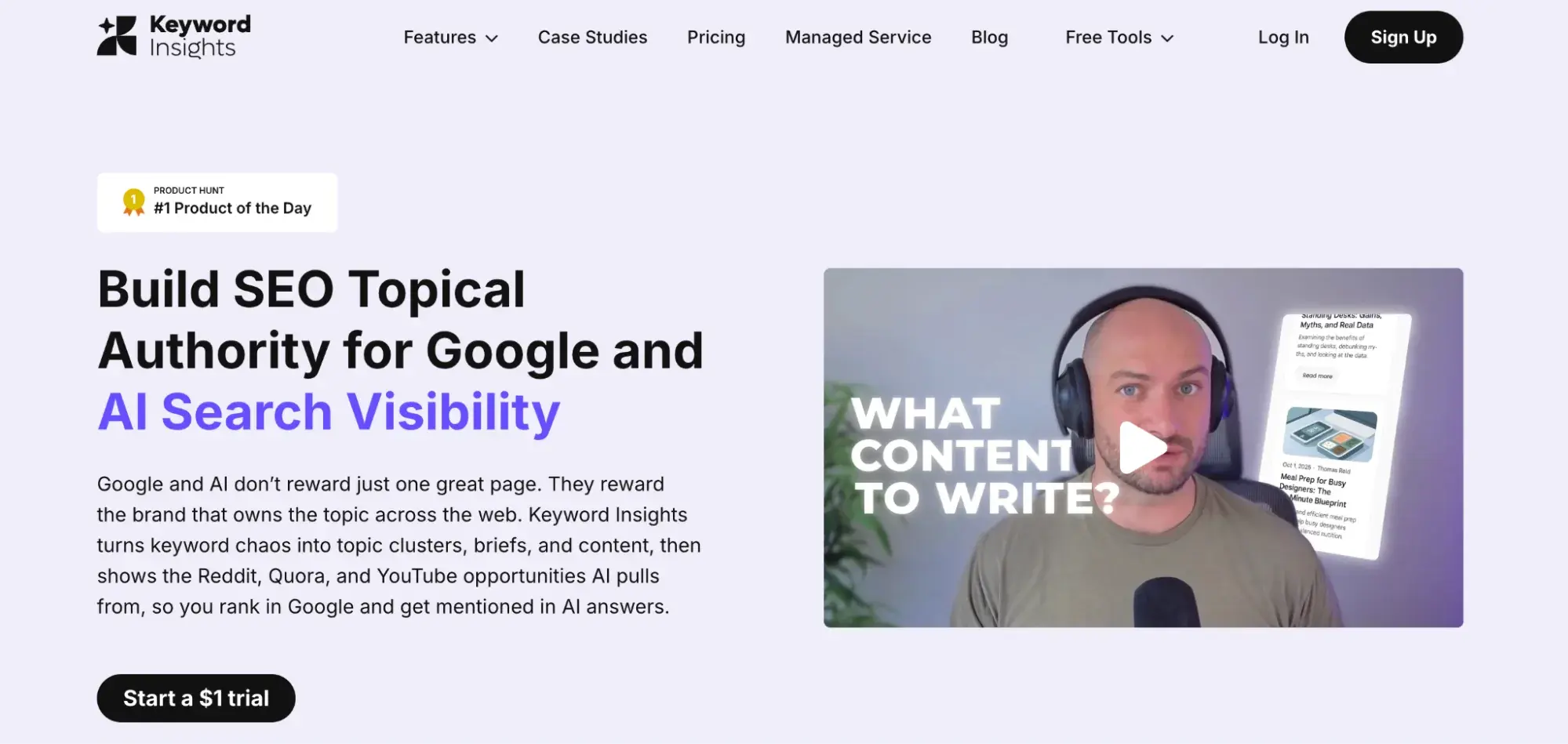
Keyword Insights is used for keyword clustering and content brief creation, which saves significant time when building topic maps for content programs. Upload a seed list, and it groups terms that can realistically be targeted on a single page versus those that need their own content.
Key Features
- AI-powered keyword clustering by search intent and SERP similarity
- Identifies which keywords can share a page versus which need standalone content
- Bulk upload for existing keyword lists
- Topic mapping output to support content program planning
- Intent labeling across clusters
What I like: The clustering logic is genuinely useful. It’s grouping by whether Google treats keywords as interchangeable on the SERP, not just grouping by theme.
Best for: Content teams building out topical clusters who have existing keyword lists to work with.
Pricing: From $58/month
AlsoAsked
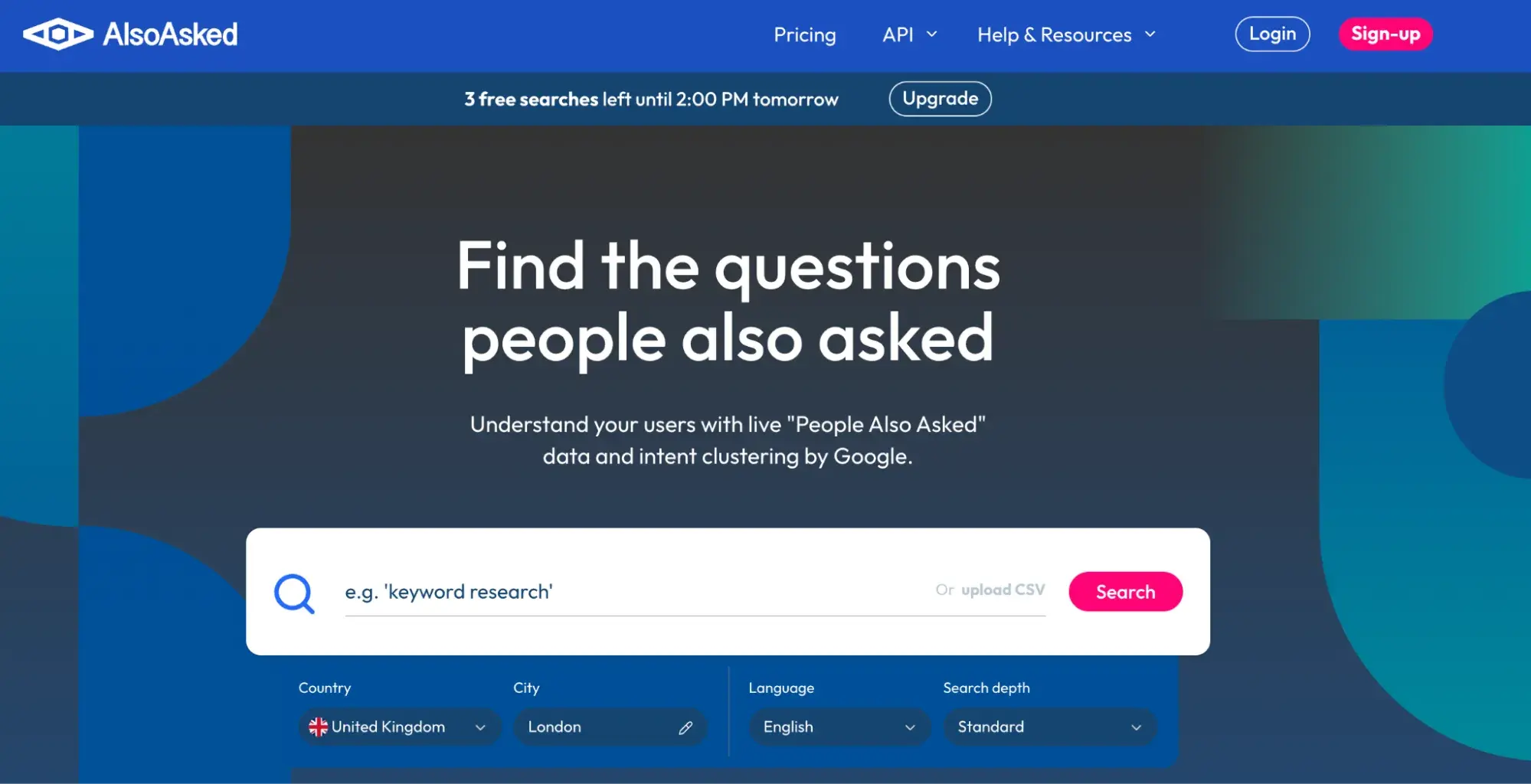
AlsoAsked pulls directly from Google’s “People Also Ask” data to map how questions branch and relate from any seed keyword. The output is a visual tree that shows how one question leads to another, reflecting how Google actually understands the semantic relationships between topics.
Key Features
- Interactive tree diagram that shows how questions branch from a seed keyword, rather than returning a flat list of related terms
- Real-time data pulled directly from Google, so results reflect what Google is actually surfacing to users rather than AI-estimated queries
- Localized PAA insights for country-specific question data to support local SEO and international content strategies
- Search intent mapping that visualizes how user questions expand from a main query, useful for identifying content gaps across the funnel
- Search history that saves results for re-download, so research isn’t lost between sessions
- Bulk upload for researching multiple seed keywords at scale
- Exportable visual outputs for use in client pitches or content briefs
What I like: The data comes straight from Google, which means you’re seeing exactly what real users are being shown not what an algorithm guesses they might ask. For FAQ-heavy content and featured snippet targeting, that accuracy is hard to replicate with other tools.
Best for: Content strategists and SEO teams building topic clusters, content briefs, or FAQ sections who want to ground their planning in real search behavior rather than keyword assumptions.
Pricing: From $12/month
Content Briefs and AI-Assisted Drafting
Content briefs give writers everything they need to create well-optimized content without starting from scratch. AI-assisted drafting speeds up production by generating structured outlines or full drafts based on top-ranking content and search intent.
HubSpot Content Hub
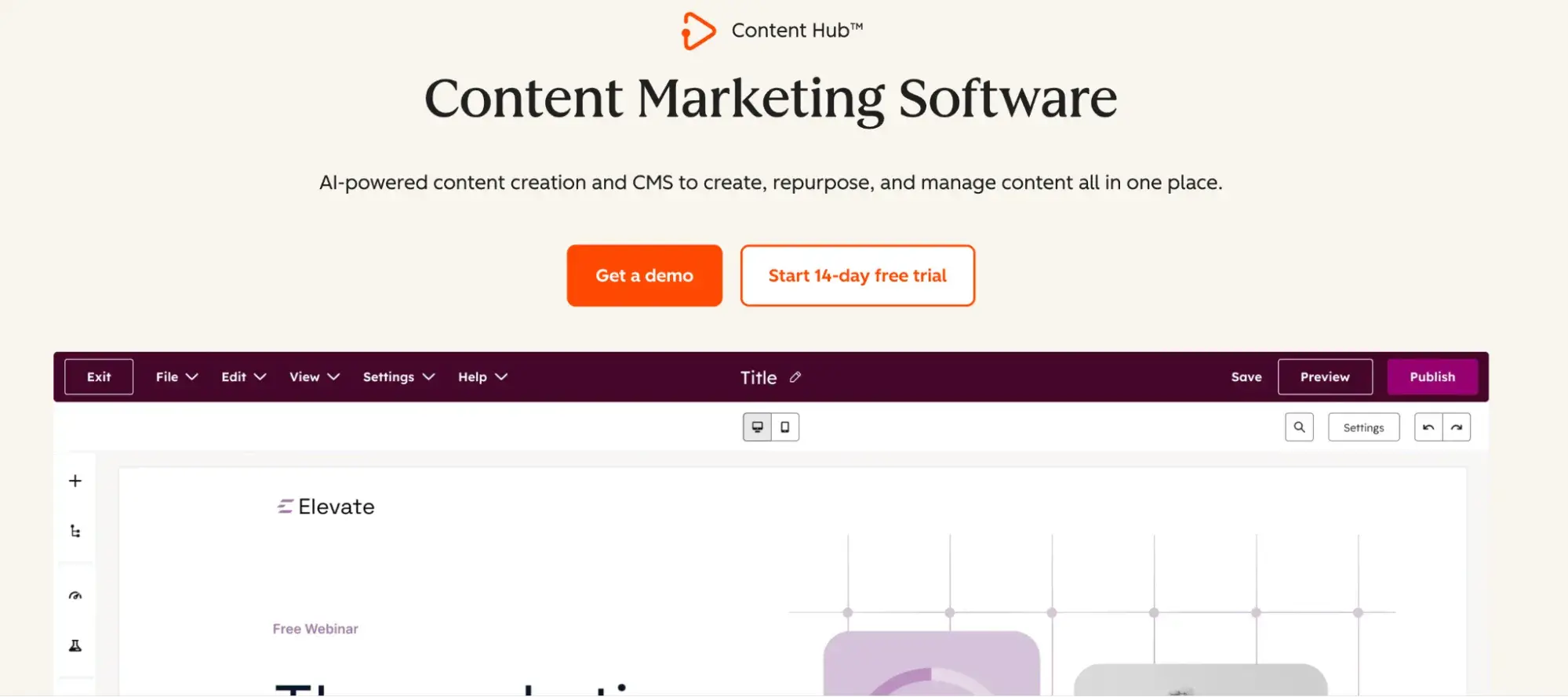
HubSpot Content Hub is a full-stack content marketing platform built around the entire content lifecycle, from ideation to publishing to performance tracking. The AI assistant can generate drafts, repurpose existing content, and suggest structure based on SEO and audience inputs, all within the CMS, so there’s no context-switching between where content is created and where it’s published.
Every piece of content connects to the CRM, SEO data, conversion analytics, and the rest of Marketing Hub. That means AI-generated content is created inside the same system where you track who’s reading it, what they do next, and whether it actually drives the pipeline.
Key Features
- Breeze for content generation, including an AI Blog Writer, Breeze Content Agent, and AI-assisted drafts for landing pages, emails, and social posts
- Content Remix to transform a single piece of content — a blog post, podcast episode, or video — into multi-format assets across channels in your brand voice
- Brand Voice tool that trains AI on your existing content to maintain consistent tone, style, and language across everything generated
- Native podcast creation and hosting with AI assistance, including distribution to Spotify, Apple Podcasts, and RSS feeds
- Smart Content personalization that serves different content variations based on CRM data without building separate pages
- Video hosting and clip optimization built into the platform, with engagement analytics flowing back into HubSpot
- Full-funnel attribution connecting content performance to leads, pipeline, and revenue inside the CRM
What I like: The integration with the rest of Marketing Hub means AI drafts can be immediately reviewed, edited, and published. Performance can be tracked against the same audience and conversion data the team already uses.
Best for: Teams running content and marketing in HubSpot who want drafting, optimization, and publishing in one workflow.
SurferSEO
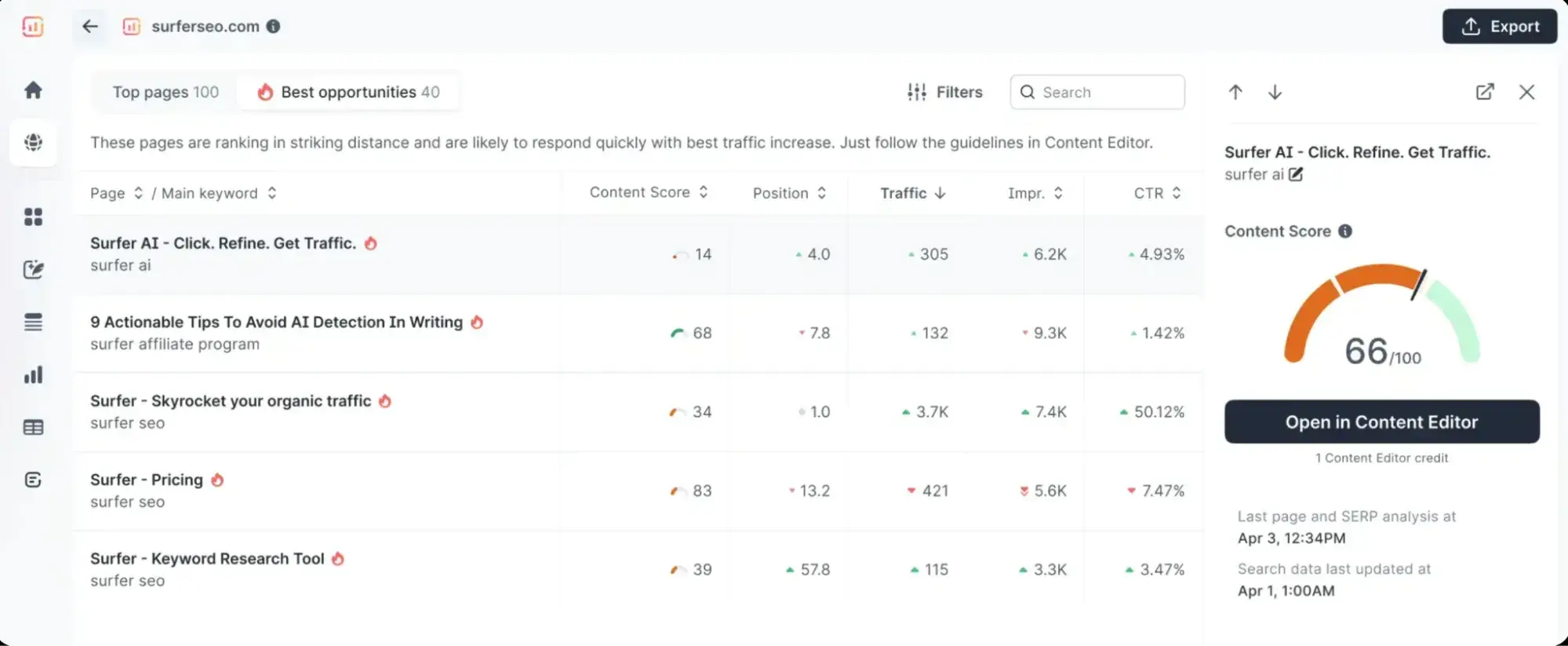
SurferSEO is used for on-page optimization and content refresh workflows. Surfer’s Content Editor uses AI to analyze top-ranking pages for a given keyword and generate a brief that includes suggested headings, NLP terms, and word count targets. Writers can use the editor in real time to see a relevance score update as they write.
Key Features
- Content Editor with real-time relevance scoring as you write
- AI-generated briefs based on analysis of top-ranking SERP pages
- NLP term suggestions and recommended heading structure
- Word count targets calibrated to what’s ranking for the keyword
- SERP Analyzer for competitive gap identification
- Surfer AI for full draft generation from a brief
- Google Docs and WordPress integrations
What I like: The real-time feedback loop during writing is genuinely useful for keeping content on-target without constant tab-switching. It’s one of the more intuitive brief-to-draft tools available.
Best for: Content writers and editors who want a structured brief and real-time optimization guidance in one tool.
Pricing: From $99/month
Frase
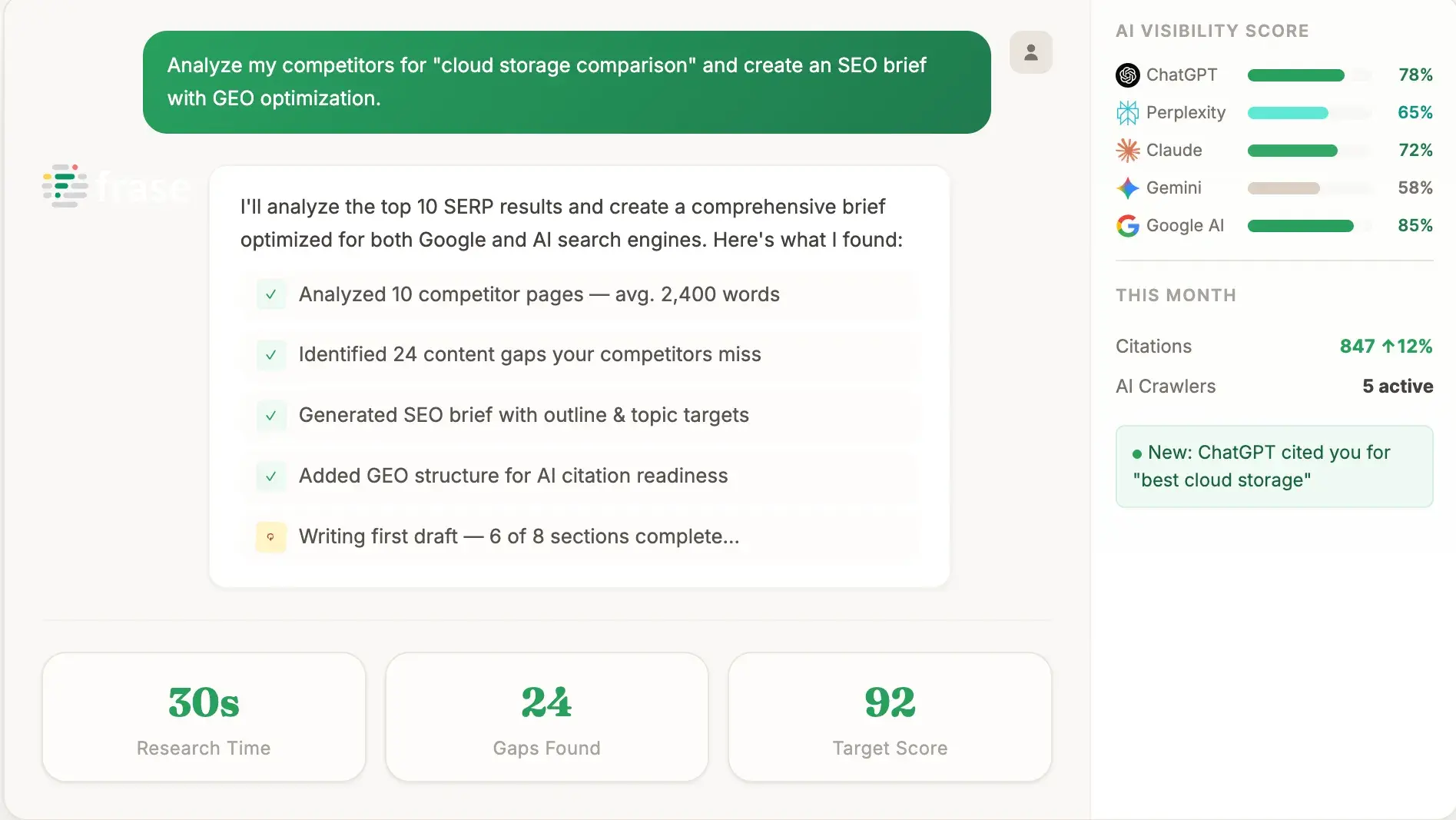
Frase is built around a research-to-brief-to-draft workflow. It aggregates information from top-ranking pages on a topic, generates a brief, and offers an AI writing assistant that can fill in sections based on the research. It’s useful for teams producing alot of informational content.
Key Features
- Automated research aggregation from top-ranking pages for any topic
- AI-generated content briefs with headers, questions, and subtopics
- AI writing assistant that drafts sections directly from the research
- Answer-focused optimization for FAQ and comparison content
- Content scoring against competing pages
- Topic clustering and content gap identification
- Integrations with Google Search Console for query data
What I like: The research aggregation is fast. Frase reduces the time to a working draft significantly for teams building FAQ-heavy or comparison content.
Best for: Teams producing informational content at scale who want research and drafting in a single tool.
Pricing: From $49/month
On-page Optimization and Refresh
On-page optimization is where AI tools have arguably had the most immediate impact. Scoring pages against top-ranking competitors, surfacing missing concepts, and flagging structural issues are tasks that AI handles quickly and consistently.
Clearscope
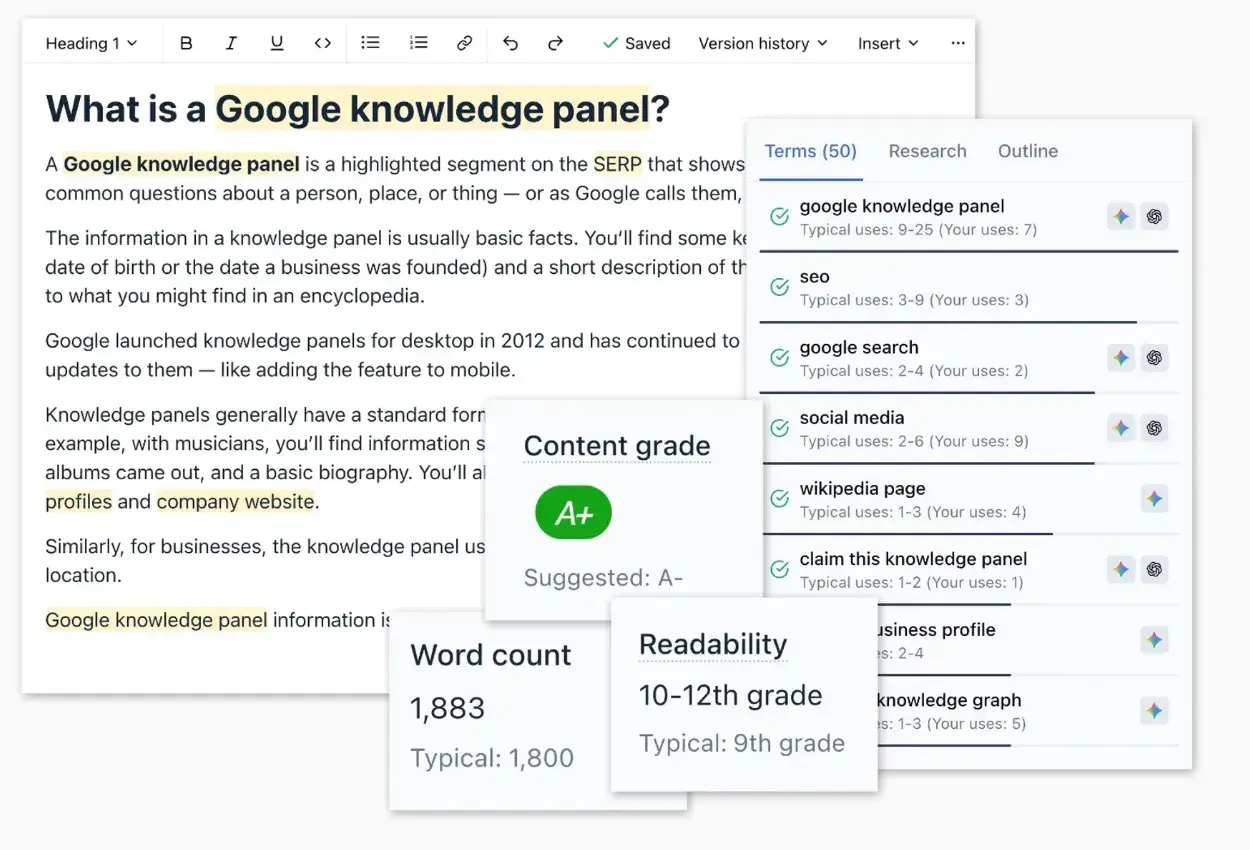
Clearscope grades content based on how thoroughly it covers a topic compared to top-ranking pages. It surfaces related terms, grades the overall comprehensiveness of the content, and integrates with Google Docs and WordPress for in-editor optimization.
Key Features
- Content grading with keyword and topic coverage reports that update in real time as you write
- Prompt tracking across ChatGPT and Gemini to monitor brand mentions in AI-generated answers
- Query fan-out awareness to understand the downstream searches AI platforms trigger when building answers
- Brand visibility tracking across both traditional search engines and AI systems
- AI-driven internal linking recommendations
- Content monitoring to protect existing traffic from decay
- Google Docs and WordPress integrations
- Unlimited users and projects on all plans
What I like: The grading system is clear, and the term suggestions focus on topic relevance rather than semantic matching alone.
Best for: Content teams running systematic refresh programs across large content libraries.
Pricing: From $129/month
MarketMuse
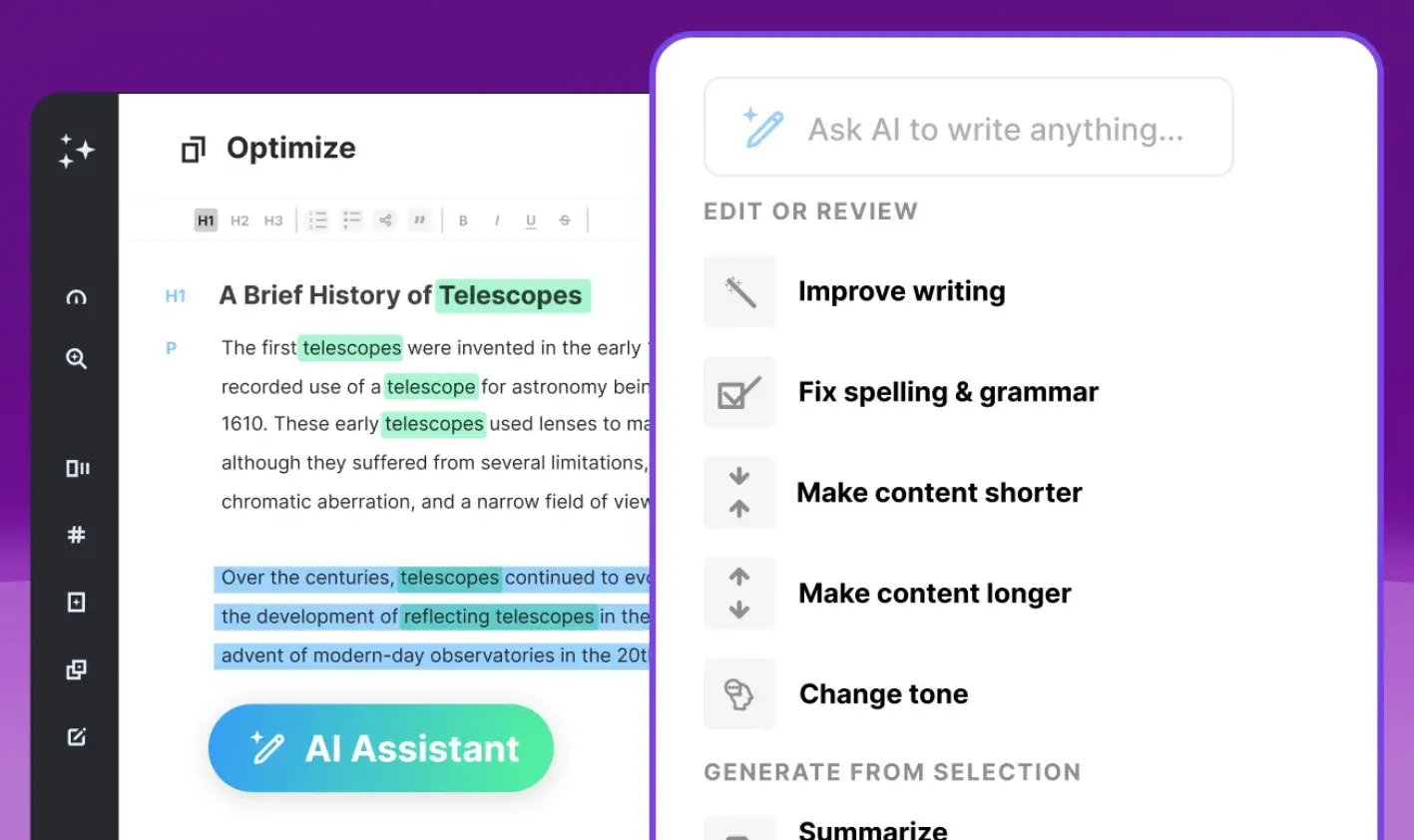
MarketMuse builds a content inventory and scores each piece based on topical depth relative to competitors. Its AI can identify content gaps, generate briefs for missing subtopics, and prioritize which pages to optimize first based on difficulty and authority. It’s more of a strategic tool than a page-level editor.
Key Features
- Site-level content inventory and gap analysis
- Topic modeling and competitive benchmarking across an entire domain
- Content briefs with personalized difficulty scores based on your site’s existing authority
- Nine content brief types including Article, Comparison, FAQ, How-to, Listicle, and Product Review
- Free plan available
What I like: MarketMuse helps teams quickly identify the highest-priority gaps across an entire content library. It prevents duplication and focuses effort where it will have the most strategic impact rather than optimizing ad hoc.
Best for: Enterprise and mid-market teams managing content libraries of 100+ pages who need a strategic, site-wide view of content gaps rather than just page-level editing.
Pricing: Varies; contact MarketMuse directly
Technical SEO and Audits
Technical SEO — crawl efficiency, site speed, structured data, canonicalization, crawl errors — requires tooling that can read the site the way a search engine would.
Screaming Frog SEO Spider
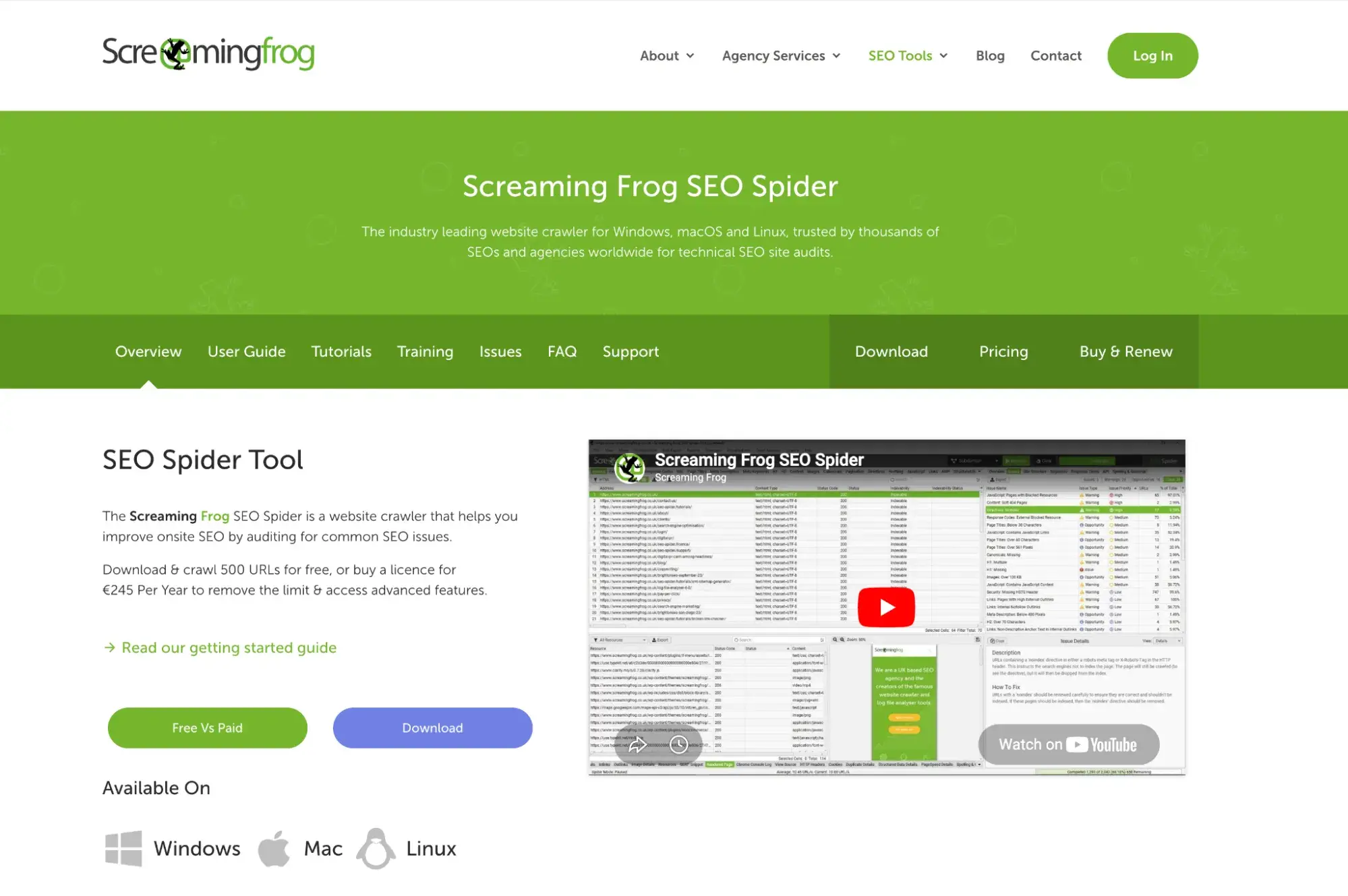
Screaming Frog is used for technical crawling and issue discovery. It crawls websites and returns a comprehensive dataset covering response codes, redirect chains, duplicate content, missing metadata, hreflang, schema markup issues, Core Web Vitals, and much more.
Key Features
- Full site crawl with broken link, redirect chain, and duplicate content detection
- Internal link analysis with crawl depth, link score, and anchor text reporting
- Structured data extraction and Schema.org validation
- JavaScript rendering via integrated Chromium for crawling React, Angular, and Vue.js frameworks
- Semantically similar duplicate page detection using vector embeddings
- Crawl comparison for tracking technical SEO changes between audits
- Integration with Google Analytics, Google Search Console, and PageSpeed Insights APIs
- Accessibility auditing against WCAG guidelines
- XML sitemap generation and scheduled crawls with auto-export to Google Sheets
What I like: This tool provides unmatched crawl data depth at its price point. The AI integration lets teams run content quality checks or custom extraction prompts at scale during a crawl, without building a separate workflow.
Best for: Technical SEOs and developers managing site health at scale especially before or after a major content push, site migration, or CMS change.
Pricing: Free (up to 500 URLs) or $279/year for unlimited
Sitebulb
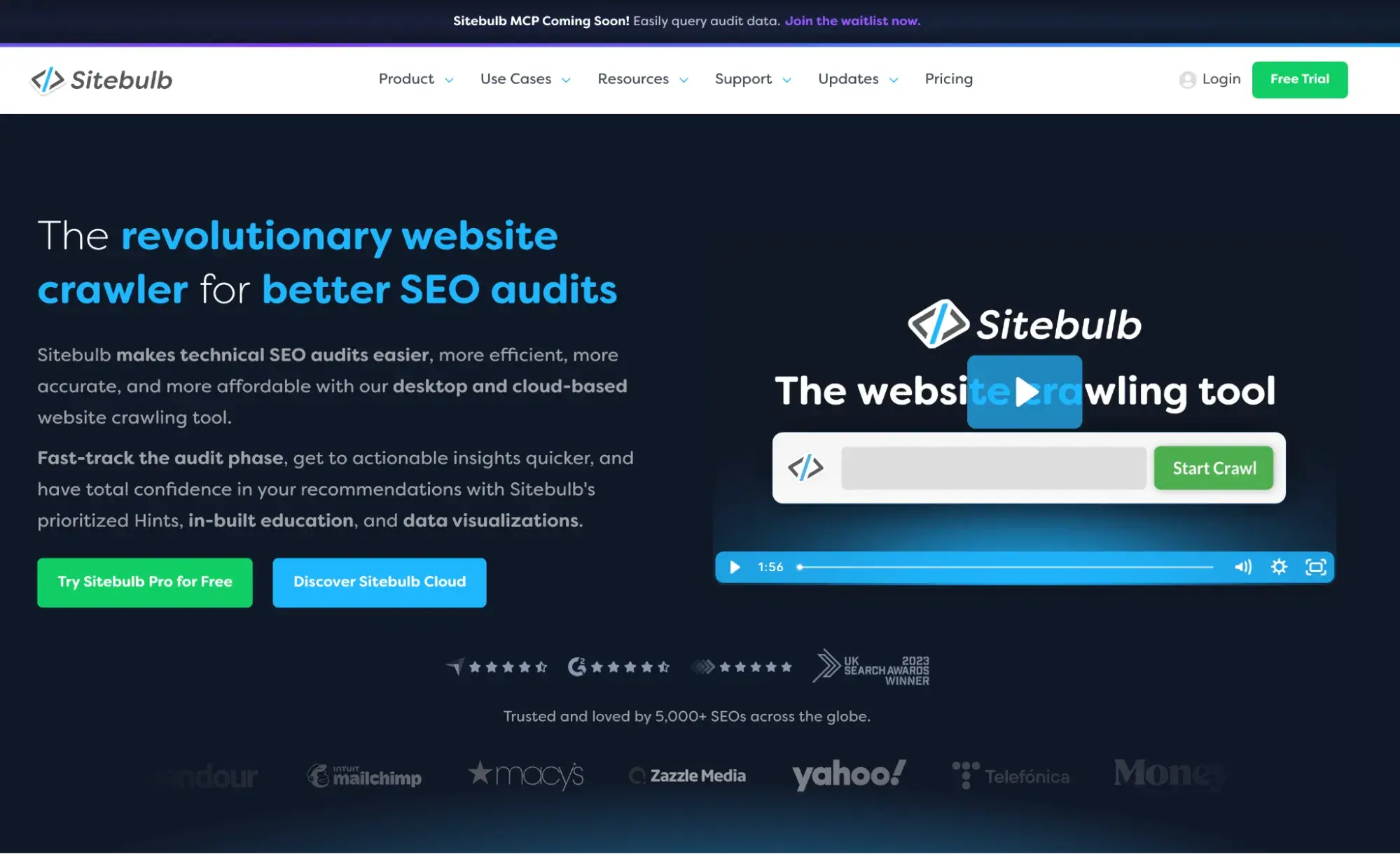
Sitebulb is a visual-first technical auditing tool that presents crawl data in a more accessible format. It includes AI-generated audit summaries that explain issues in plain language and prioritize fixes by estimated impact.
Key Features
- Visual audit reports with plain-language explanations of technical issues
- AI-generated summaries that prioritize fixes by estimated impact
- Crawl depth and site structure visualization
- Internal linking analysis and orphaned page detection
- Core Web Vitals and page experience reporting
- Accessibility auditing
- Shareable reports designed for presenting findings to developers and stakeholders
What I like: The visual audit reports make it easier to brief developers on technical issues without needing to export and reformat raw data. For agencies presenting findings to clients, that alone saves significant time.
Best for: Agencies and in-house teams that need to report technical findings to stakeholders who don’t have technical expertise.
Pricing: From $18/month
Internal Linking and Site Structure
Internal linking improves crawl efficiency, distributes page authority, and signals to search engines how topics relate. Identifying the right opportunities manually across hundreds of pages is impractical. AI tools automate the discovery.
Ahrefs
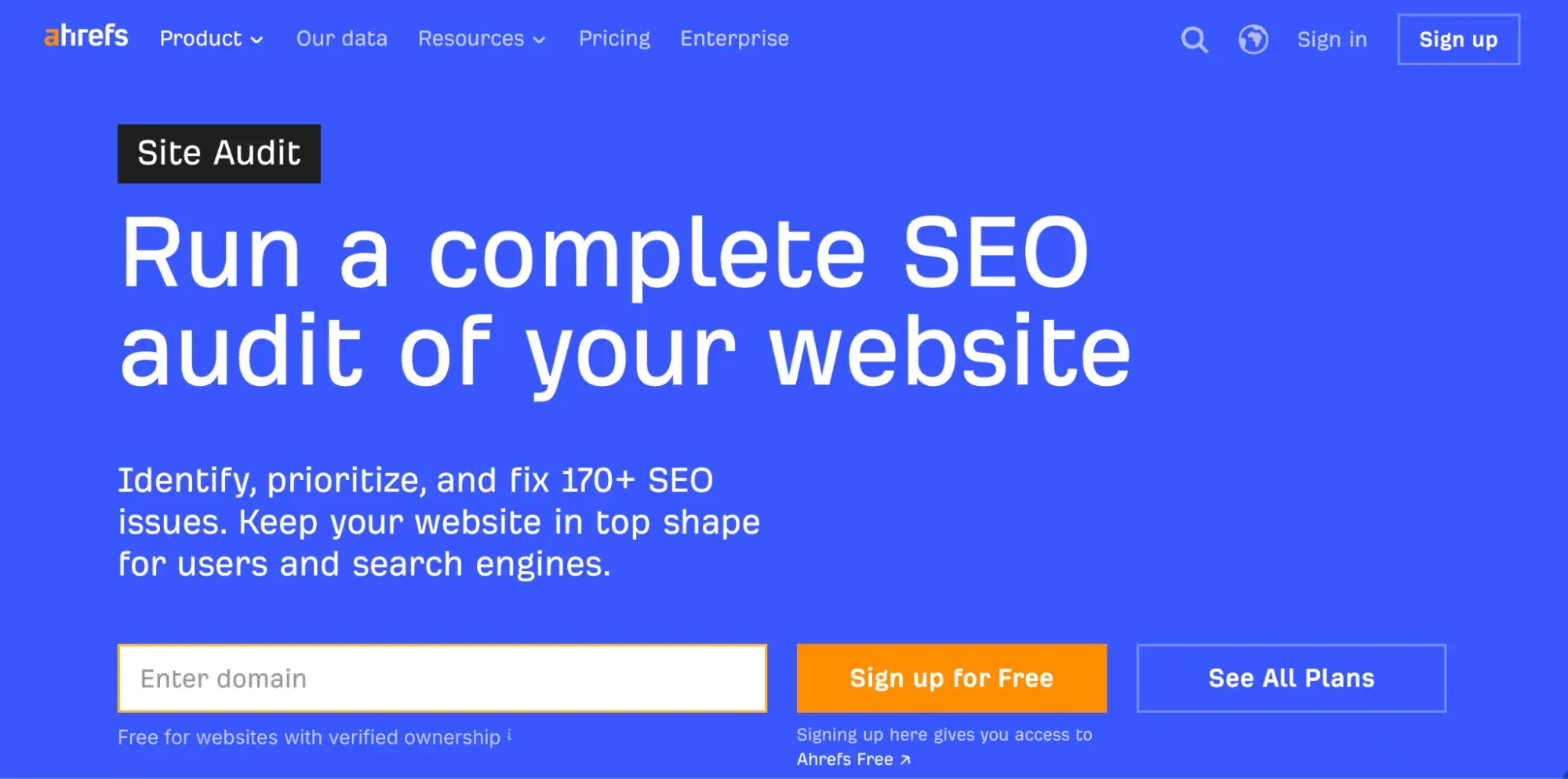
Ahrefs is best known as a backlink and keyword research platform, but its Site Audit and internal link reporting tools make it a strong addition to any site structure workflow. For teams already using Ahrefs for competitive research, the internal linking data is right there — no separate tool required.
Key Features
- Site Audit with always-on crawling that flags internal linking issues, including orphaned pages, broken internal links, redirect chains, and crawl depth problems
- Internal link report showing inbound and outbound links per page, anchor text distribution, and pages with too few or too many internal links
- Best By Links report for identifying high-authority pages that could be passing more equity through strategic internal linking
- Content Explorer for surfacing existing pages on a topic that should be interlinked, but aren’t
- Site structure visualization to map how equity flows across the domain
- Agent A, an AI agent with full access to Ahrefs data, for automating internal link audits and research tasks at scale
What I like: Having internal link auditing in the same platform removes a context switch for teams already in Ahrefs for keyword and competitive research. The Best By Links report is particularly useful. It’s a fast way to identify which pages are already earning authority and make sure they’re linking to the content that needs it most.
Best for: SEO teams already using Ahrefs who want internal linking insights alongside their broader keyword and backlink workflow, without adding another tool.
Pricing: From $129/month
Link Whisper
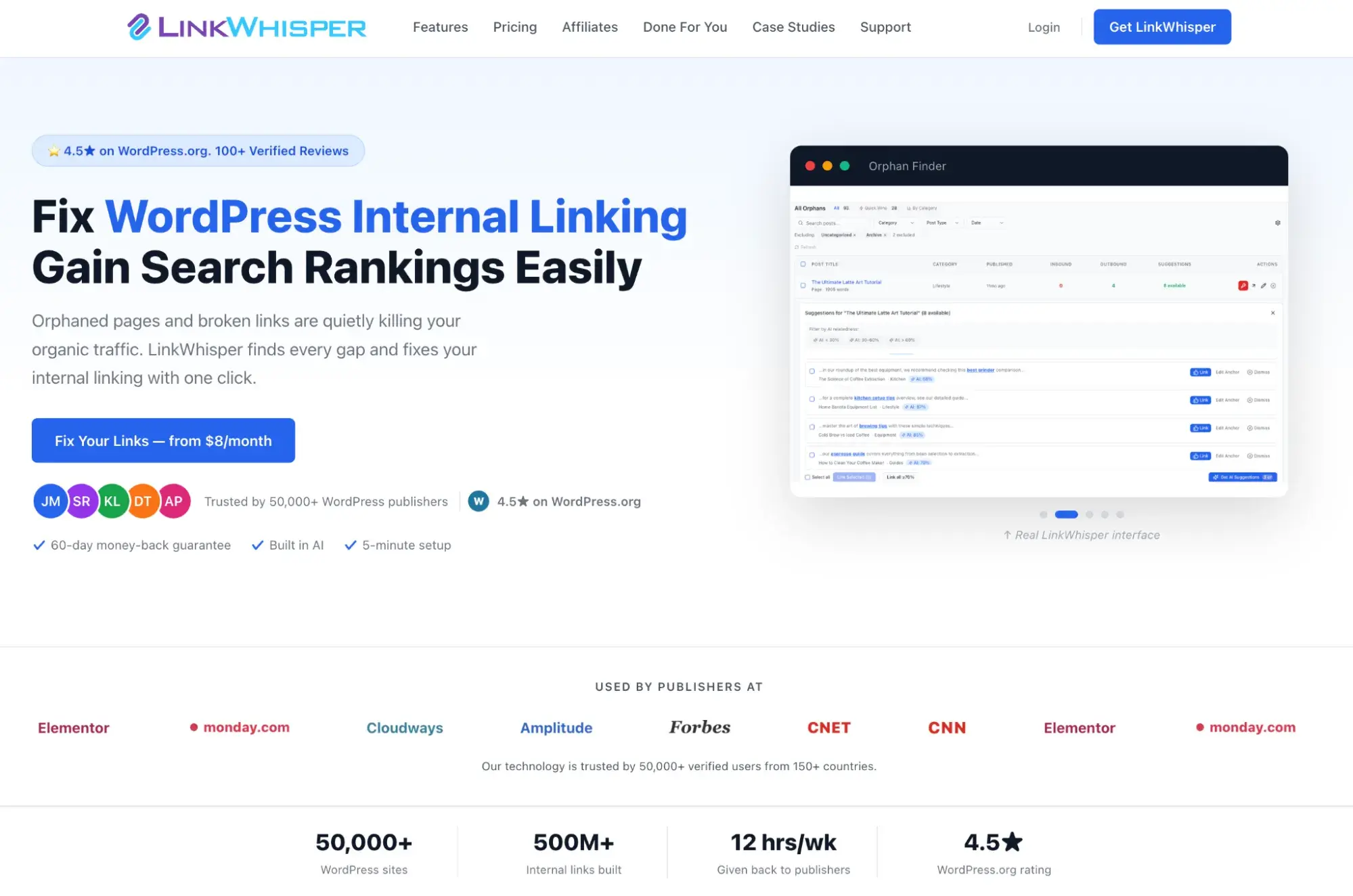
Link Whisperer is a WordPress plugin that uses AI to suggest and insert internal links as content is written or edited, with site-level reporting for orphaned pages, broken links, and link structure analysis.
Key Features
- AI-powered internal link suggestions surfaced directly in the WordPress editor
- Auto-linking for automatic insertion whenever target keywords appear across past and future posts
- Orphaned page detection with batch link-adding from the dashboard
- Site-level internal link report showing inbound and outbound links per page
- Google Search Console integration for surfacing rank keywords as link targets
- Click analytics and visual sitemap
- Broken link detection
- Compatible with Elementor, Divi, Yoast, and Rank Math
What I like: Link Whisper removes the manual work of internal linking without requiring a strategic overhaul. The GSC integration surfaces the terms Google already associates with your pages as linking targets, which makes suggestions more accurate than a pure keyword match.
Best for: WordPress sites with 50+ published pages where manual internal linking becomes a bottleneck. Not suited for non-WordPress sites.
Pricing: From $97/year
AI Visibility and Citations
Answer engine optimization tools focus on improving visibility in AI-generated answers, citations, and brand mentions. While SEO focuses on ranking in traditional search results, AEO focuses on appearing in AI-generated answers from systems like ChatGPT, Perplexity, Google AI Overviews, and Bing Copilot.
AEO and SEO are different disciplines, but complementary ones. Teams that optimize for both are building durable visibility for the channels where buyers are increasingly going to find answers.
HubSpot AEO
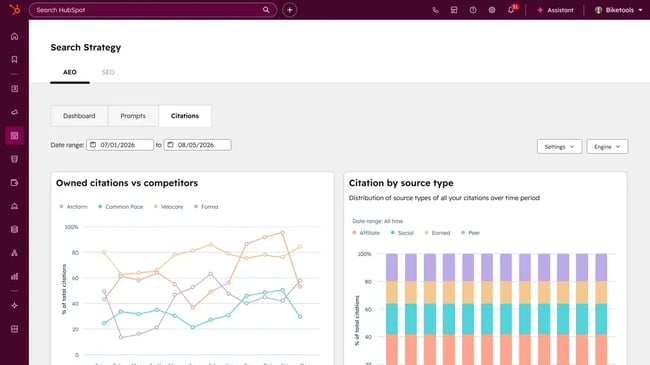
HubSpot AEO helps assess current AI search visibility, helping teams understand where their brand appears in AI-generated answers and why. It surfaces which pages are being cited, which queries are triggering citations, and where visibility gaps exist across AI engines — and it does all of that inside the same platform where teams are already tracking SEO, content, and pipeline.
For demand generation leaders being asked to show how content investment connects to pipeline, AEO visibility metrics — citations, share of AI answers, coverage by topic — are becoming a required reporting layer alongside traditional SEO metrics.
Key Features
- Tracks where and how the brand appears in AI-generated answers across major AI search platforms
- Identifies which pages are being cited and which queries are triggering those citations
- Surfaces visibility gaps by topic across AI engines, including ChatGPT, Perplexity, and Gemini
- Brand Visibility Score and gap analysis
- Connected to the same CRM attribution model as Marketing Hub so AI visibility data ties directly to leads and pipeline
- Available as a standalone product or through Marketing Hub Pro and Enterprise; no separate contract required
What I like: The combination of SEO and AEO in a single platform means teams can see the full picture of how their content is being found both in traditional search and in the AI-generated answers where purchase decisions increasingly begin. That integration is what makes the data actionable rather than just interesting.
Best for: Growth teams that want to measure and optimize for both traditional SEO and AI search visibility without managing two separate reporting systems. It’s especially useful for teams already on Marketing Hub who want to add AI visibility tracking without adding another tool.
Pricing: $50 per month as a standalone tool or included in Marketing Hub Pro and Enterprise editions
HubSpot AEO Grader
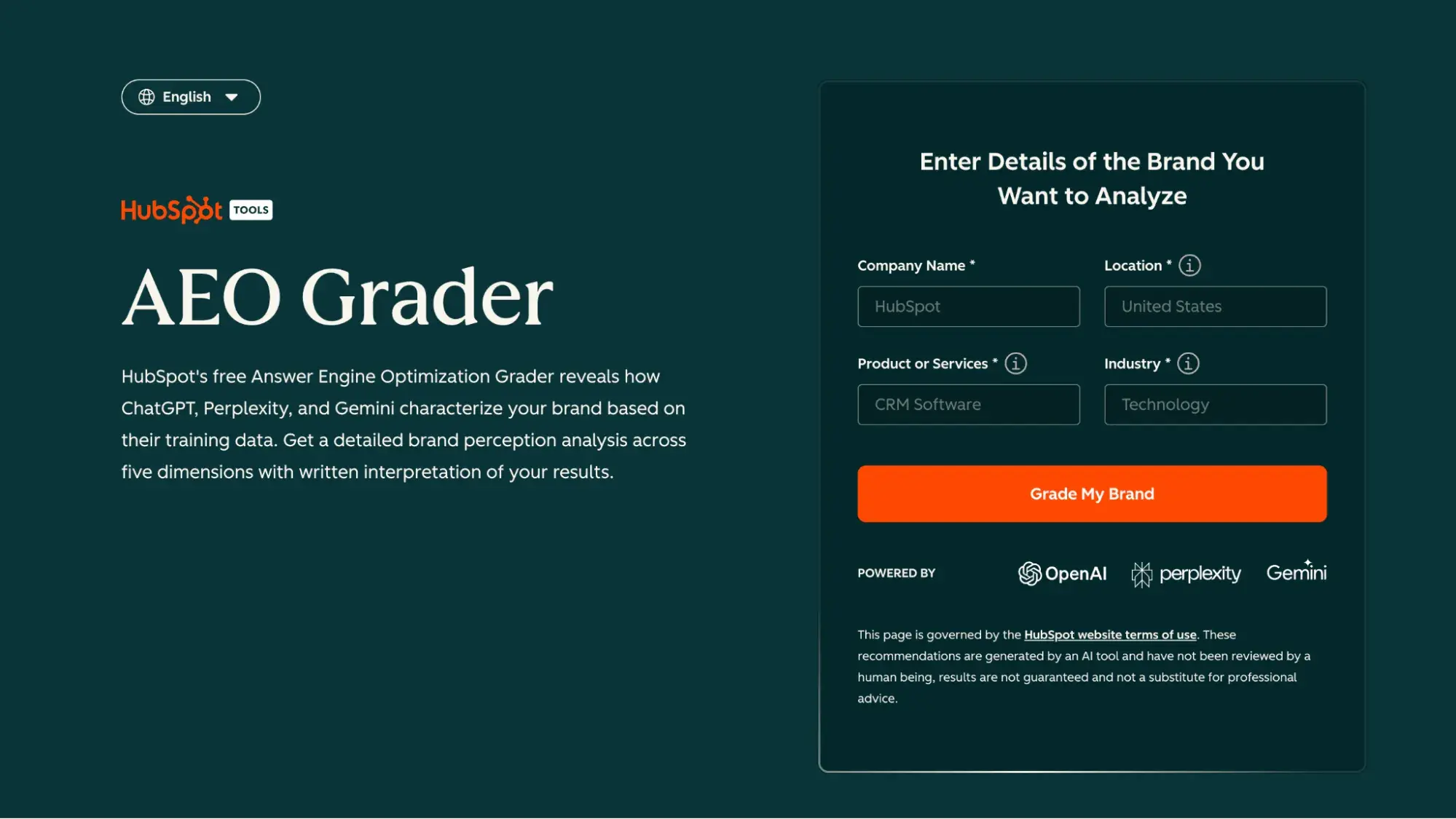
HubSpot AEO Grader is a free diagnostic tool that evaluates how AI engines currently characterize your brand based on their training data. Rather than auditing your website, it assesses your brand across five dimensions — sentiment, presence quality, brand recognition, share of voice, and market position — and returns a score out of 100 with written interpretation of the results across ChatGPT, Perplexity, and Gemini.
It’s a useful first step for teams evaluating content positioning in AI-generated answers without full commitment to an audit. The output is specific enough to act on, and it takes minutes rather than hours.
Key Features
- Evaluates brand visibility across ChatGPT, Perplexity, and Google Gemini
- Reviews content structure, entity clarity, freshness, and domain authority signals
- Returns a scored output with prioritized recommendations
- Free to use — no Marketing Hub subscription required
- Results feed naturally into an AEO roadmap for teams ready to take the next steps
Pro tip: Run the AEO Grader before building your AI visibility roadmap. It’s a fast way to understand where the biggest gaps are without committing to a full audit. The prioritized output gives you a defensible starting point for deciding where to focus first.
Free Resource: Before diving deeper into SEO and AEO tooling, make sure the foundation is solid. The HubSpot Complete SEO Starter Pack includes an on-page SEO template, a search intent and research template, and a 21 SEO myths ebook to help build a reliable baseline — free to download.
How to Automate SEO Without Breaking Your Content
Automation creates scale. But poorly configured automation also creates scale for thin content, mismatched intent, and inconsistent brand voice. Here’s how to build an automated SEO workflow that maintains quality at every stage.
Step 1: Run batch keyword research.
Start by generating a large seed list of keywords either manually, through customer research, or using a dedicated keyword research tool like Semrush. If you’re already using HubSpot, HubSpot’s SEO tools can surface topic and keyword suggestions based on relevance and competition to help inform your content strategy.
Then batch-upload that list into a clustering tool (Keyword Insights works well here) to group terms by topic and intent. The goal at this stage is to understand your full topical landscape before committing to content priorities. Clustering first prevents the common mistake of creating multiple pages that compete with each other.
Step 2: Cluster by topic and intent.
Once keywords are clustered, map each cluster to one of three content types:
- Pillar content — broad, high-authority
- Supporting content — specific, long-tail
- Landing pages — conversion-focused
This mapping becomes the architecture for your editorial calendar, not just a list of keywords to target.
Document which clusters represent existing content opportunities versus net-new content opportunities. That distinction determines where you use refresh workflows versus new production workflows.
Step 3: Use AI-assisted drafts as starting points.
AI drafts are useful when they’re used as a first draft, not a final one. Generate a draft from a brief, then treat it as a structured research document that needs a human layer. Take time for:
- Fact-checking
- Brand voice alignment
- Adding original examples
- Adding any proprietary insights that the AI can’t access
The mistake is publishing AI drafts without that layer. The content technically exists, but it doesn’t build authority, and it doesn’t say anything a search engine couldn’t find elsewhere. The human layer is what makes content worth citing.
Step 4: Build an editor review step.
Every content workflow that uses AI assistance needs a human review checkpoint. This isn’t optional. Make it explicit in your SOP. Define:
- What the reviewer is checking for
- What qualifies a draft for publication
- Who is accountable for the decision
For teams managing high content volume, a checklist-based review speeds things up while maintaining standards. Build the checklist once, use it every time.
Step 5: Schedule systematic content audits.
Publish-and-forget is a visibility leak. A quarterly or biannual content audit — using HubSpot’s SEO recommendations to surface technical and on-page issues, or Semrush’s content audit tool for deeper cannibalization and competitive analysis — helps identify pages that have lost ranking or become factually outdated. Schedule audits like you schedule production.
Step 6: Act on internal link recommendations.
Every content audit should include an internal linking pass. Consider:
- Flagging pages with no inbound internal links
- Identifying which pillar pages are missing links to key supporting content
- Using AI-assisted tools to find semantically relevant linking opportunities across your library
Internal linking is one of the highest-ROI, lowest-cost SEO tasks available — and it’s consistently underdone. Automating the discovery makes it easier to stay on top of it without blocking the production workflow.
Frequently Asked Questions About AI SEO Tools
What are AI search optimization tools?
AI search optimization tools are software platforms that use artificial intelligence and machine learning to improve how search engines discover, index, and rank content. AI SEO tools assist SEO teams in completing existing SEO tasks more efficiently, while AEO tools address a newer visibility layer in AI-generated answer surfaces.
Which AI SEO tools are best for small businesses?
Small businesses benefit most from tools that are simple to use and don’t require dedicated technical expertise. HubSpot’s SEO tools, built into Marketing Hub, offer topic and keyword suggestions, on-page recommendations, and performance reporting in a single interface that doesn’t require an SEO background to use effectively. The priority for small businesses should be coverage at the critical workflow stages — research, on-page, and technical — rather than maximum tool count.
Can AI content rank in search?
AI-assisted content that includes original insights, accurate information, proper structure, and genuine expertise can rank and perform well. The issue isn’t that AI writes the first draft. Problems occur when AI drafts are published without meaningful human review, fact-checking, or original perspective. Google’s quality guidance focuses on the usefulness and expertise of the final piece, not the process used to create it. Teams that use AI to accelerate production and then invest the human effort in quality can produce high-ranking content efficiently.
How do I measure the ROI of AI SEO software?
Start with a baseline before introducing new tools: organic traffic, ranking positions for target keywords, and conversion rate from organic. After implementation, track those same metrics — but also look at operational efficiency metrics. The ROI case for AI SEO tools usually reduces the number of hours spent on high-volume, repetitive tasks and increases organic traffic gains from content that gets optimized and refreshed more systematically than manual workflows allow.
How often should I refresh content with AI tools?
Competitive commercial terms, comparison content, and anything referencing data, statistics, or tools should be reviewed every six months at a minimum. Informational content on slower-moving topics can run on an annual review cycle.
The practical approach is to use an AI SEO audit tool — HubSpot’s SEO recommendations, Semrush’s content audit, or similar — to flag pages that have dropped in ranking or accumulated significant outdated content, and use that signal to prioritize the refresh queue rather than working through an arbitrary calendar.
The right tools turn SEO and AI visibility into a growth system.
AI SEO tools are a practical requirement for staying competitive in a space where the volume and complexity of SEO work have outpaced what manual processes can handle. The best approach is to build a stack where each tool handles the job it does best:
- Research and clustering
- Briefing and drafting
- On-page optimization
- Technical auditing
- Internal linking
- AI search visibility
The goal is automation that frees up resources for human judgment, expertise, and original thinking — qualities that search engines and AI systems reward.
HubSpot’s SEO tools cover the topic suggestions, optimization, and reporting workflow natively within Marketing Hub, making them a strong anchor for teams that want fewer disconnected dashboards and tighter alignment between SEO performance and revenue. For teams ready to look beyond traditional search, HubSpot AEO adds the AI visibility layer that lets the same team track citations and presence in AI-generated answers alongside organic rankings.

from Marketing https://ift.tt/aE342Q0
Comments
Post a Comment